
By Dana King
The Question That Lingered
It began with a question—asked gently, but with an honesty that landed deeper than I expected:
“Why do white women have so many rules?”
We were in casual conversation. A Black sister I was talking with had spent time with both white and Black women in church spaces and noticed a difference. She wasn’t criticizing, just observing—curious, perhaps even puzzled.
I didn’t know how to respond. I stumbled through a non-answer. But the question stayed with me—not as an accusation, but as an invitation. It stirred something that had gone unexamined in me.
Over the following months, I couldn’t let it go. I started to notice. I watched. I wondered. Was it true? Do we have more rules? Later I wondered, What did she even mean by “rules”? I probably should’ve asked her a follow up question.
And then something happened that brought her question into sharper focus—not with explanation, but with witness.
When Ministry Begins Outside the Handbook
Not long after, a friend of mine, Michelle—a Black Baptist sister who had begun to admire and befriend members of our Latter-day Saint congregations—saw something. She noticed a need among the Black women in our wards: a desire for more connection, deeper spiritual fellowship, and space that felt familiar and free.
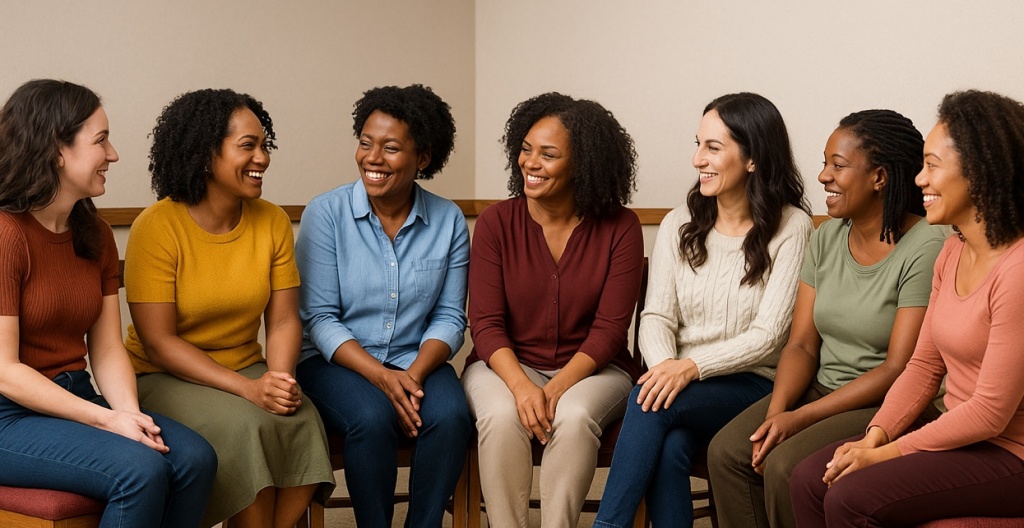
Michelle didn’t wait for a calling or a committee. She simply offered something from her tradition: a Sister Circle—a deeply rooted practice among Black women of gathering in sacred space to pray, laugh, support, and heal.
Nina, one of our Black Latter-day Saint sisters, immediately embraced the idea. It didn’t feel odd that they came from different denominations. It felt natural. And soon, women across three Latter-day Saint wards began to join with the Baptist sisters—grateful for the sense of sisterhood that resonated deeply with their lived experience.
Michelle affirmed for me: “Dana, what comes of the heart reaches the heart.”
The group was not exclusive. It wasn’t formalized, but it had purpose. It didn’t follow a church calendar. But it was Spirit-filled. And it became immediately a space where presence mattered more than structure, where ministry happened through showing up—not being assigned.
To some in traditional leadership, it raised questions. Was it okay for women to gather at church outside the traditional Relief Society framework?
But to the women gathering, there was no hesitation. They weren’t forming a breakaway group. They were following the promptings of the Spirit. No handbook required.
Read the rest of the article on our Substack

 Black Lives Bless